
The Growth Leader
Masterclass
LESSON 1
The Five Flag Start
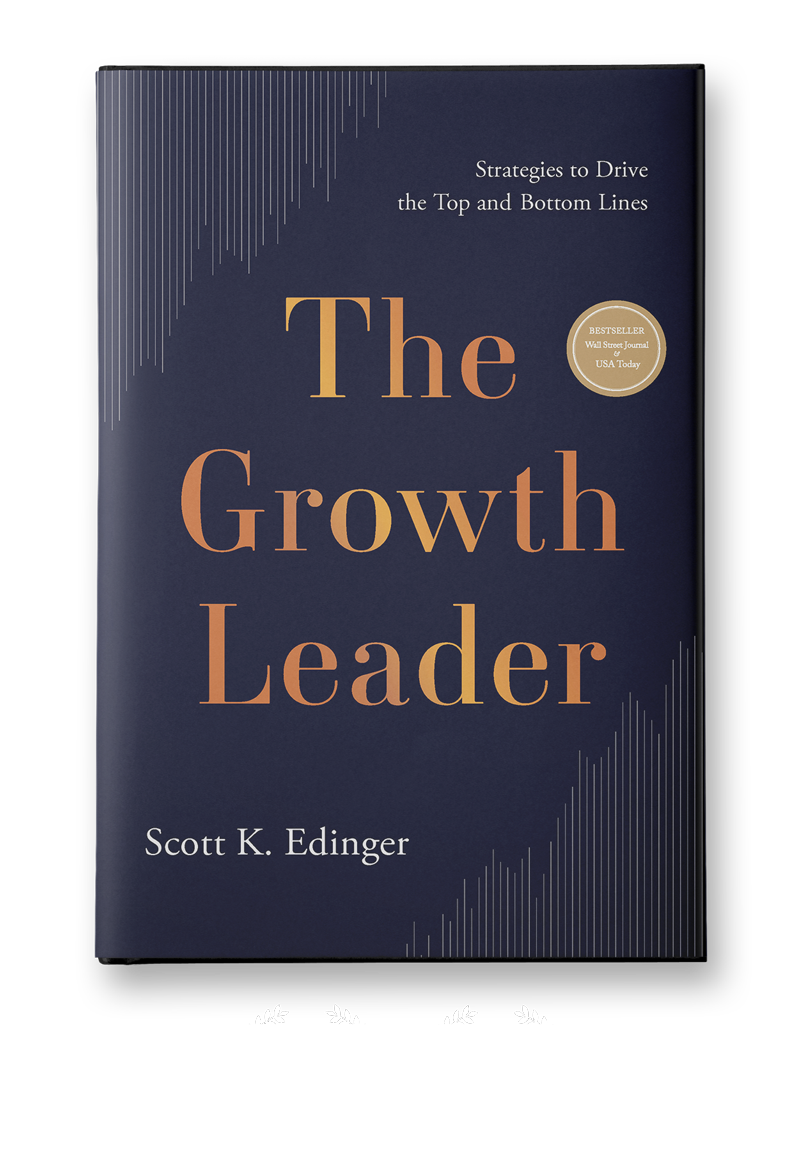
Scott K. Edinger shares a framework for defining your strategy, called The Five Flag Start in his national bestselling book, The Growth Leader.
LESSON 2
Sales is Strategy in Action
To successfully execute an organization’s strategy, it must be the focus of every person in that organization. Sales is strategy in action. Sales leadership having a seat at your table is a must. With a clear strategy, inspiring leadership, and aligned sales, powerful leaders understand that true competitive advantage doesn’t come from innovation alone, but belongs to companies that use their sales organization to add and create value.
LESSON 3
Growth is THE Leadership Issue
Strategic growth requires an organization to do more than sell by simply communicating the value of its products or services. It must create value in the way it sells by delivering a compelling experience that adds value beyond the product itself. As a leader, it’s your job to build and guide that experience.
LESSON 4
Is Your Sales Team Struggling to Sell Solutions?
One of the most common concerns expressed by CEOs about their sales organization is that they aren’t consultative enough and that they need to do a better job of selling solutions. The research think tank Gartner highlights that a critical factor for success in this market will be a “well-trained consultative sales organization.” But, the approaches for consultative selling and the solution sale have been around for four decades. So why hasn’t the shift to selling solutions happened already?
LESSON 5
Create A High Performance Culture
For an organization to grow, it requires a growth leader. The performance of a CEO or key manager translates directly to your organization’s growth—whether that’s formulating strategies, transforming the business, leading the execution of priorities, or galvanizing teams to drive success.
LESSON 6
Would Customers Pay for Your Sales Calls?
When Scott K. Edinger speaks to audiences of sales professionals and asks, “How many of you sell value versus price?” everyone raises their hand. But his next question “So how do you do that?” is frequently followed by an uncomfortable silence. Many consider themselves to be value sellers but few are able to articulate what that really means.
LESSON 7
The Three C's of Inspiring and Motivating
In my nearly 20 years of work in organization development, I’ve never heard anyone say that a leader communicated too much or too well. On the contrary, the most common improvement suggestion I’ve seen offered up on the thousands of 360 evaluations I’ve reviewed over the years is that it would be better if the subject in question learned to communicate more effectively.
LESSON 8
Cultivating Executive Presence
Leaders are universally concerned about how they show up and interact with others, from the Boardroom to the front lines of their business. As humans, we’ve intuitively understood for thousands of years that there is an “it” factor when it comes to leadership that separates the excellent from the average. In Scott K. Edinger's study of tens of thousands of 360-degree surveys, the idea of “presence” and the way a leader conducts themselves is one of the most common areas where colleagues suggest a leader needs to improve.
LESSON 9
Right by Three
When everyone in the company shares a common set of beliefs that lead to behaviors; we call that the company’s culture. This is not to say people don’t think on their own or that there is never disagreement. But broadly, a shared set of beliefs about how we are intended to act, how we operate as a group, and what we expect from each other and from our performance determine what is acceptable within any organization.
It is so vital that executives keep a close eye on the elements of culture that are most important for their business. You must be aware of the beliefs that are most useful in encouraging and fostering the behaviors that you want to see in your organization.
Follow Scott K. Edinger's Right by Three Leadership Framework to do just that.
LESSON 10
Magnets and Milestones
Scott K. Edinger shares a simple metaphorical model that offers a bridge from the plans developed in the Five Flag Start over to the execution required to realize your plan. Magnets (these are your organizational and departmental strategic initiatives) define the work that must be done to achieve each goal. Milestones are a means of measuring the progress of that work toward the goal. This simple metaphorical model guides leaders away from falling into the trap of managing tasks and getting stuck in the quicksand of complex project management.
SCOTT'S BOOKS